Published 16 June 2026 · Screen Types · 2 min read
Motorized vs Manual Projection Screens
Push-button convenience vs a simpler mechanism — how motorized and tab tension screens actually differ.
How Each Works
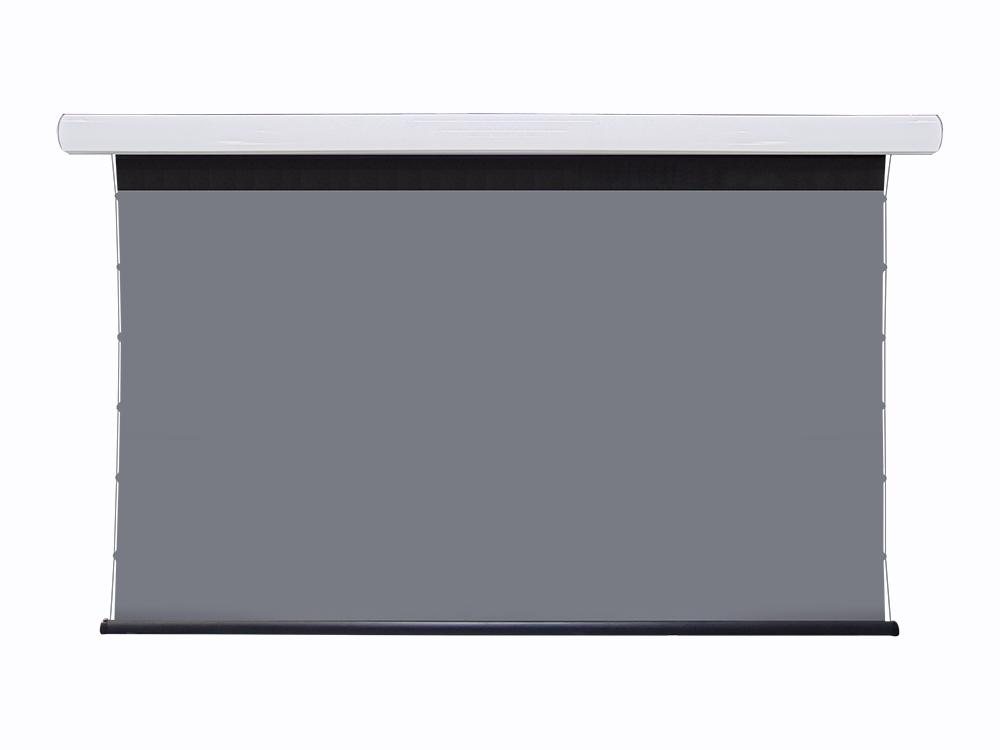
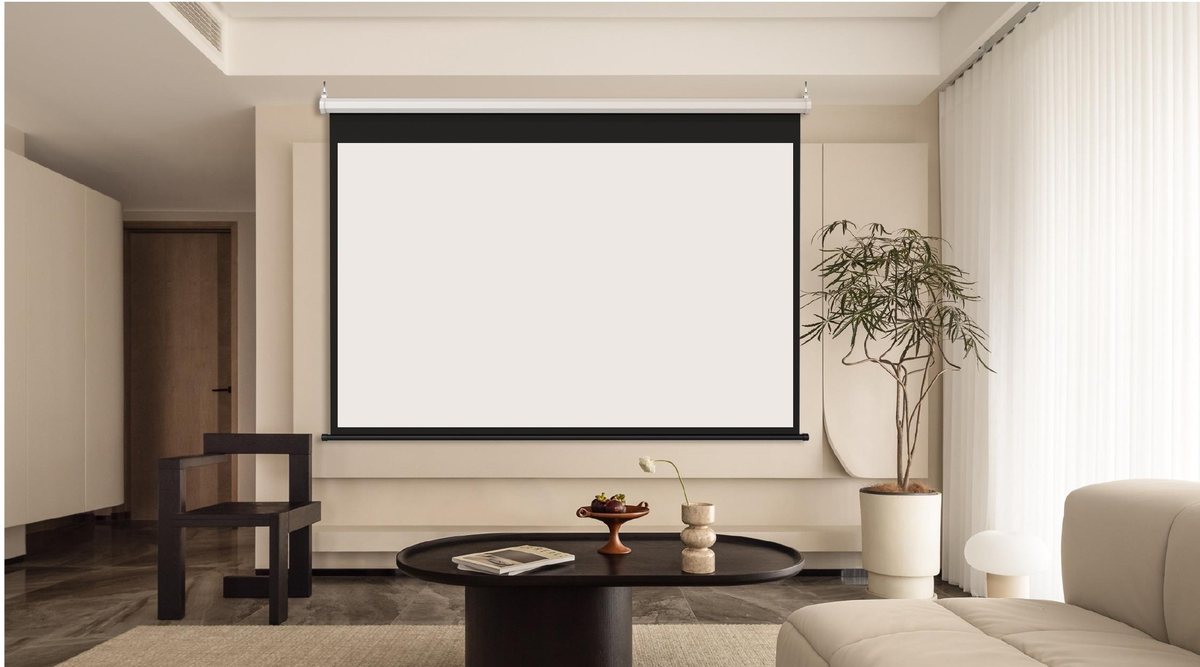
A motorized screen uses an electric motor inside the roller housing to raise and lower the screen, typically via remote or wall switch. A tab tension screen can also be motorized, but is defined by its side tensioning cables that pull the fabric taut on both edges as it extends, keeping the surface flatter across the full image area.
Image Flatness
A standard motorized screen without side tensioning can develop slight waviness at the edges over time or in humid conditions. Tab tensioning largely eliminates this, which matters more as screen width increases or with higher-gain, more reflective fabrics where waviness is easier to see.
Convenience and Installation
Both retract fully out of sight into a ceiling or wall-mounted housing, which is the main advantage either has over a fixed frame screen. Both need a power connection at the housing; a tab tension screen's cable mechanism is a slightly more precise piece of engineering, which is usually reflected in the price versus a standard motorized screen of the same size.
Which Should You Choose?
For everyday presentation rooms and classrooms, a standard motorized screen is usually sufficient. For a dedicated home theatre or any install where edge flatness under demanding fabric or wide-screen conditions matters, a tab tension screen is the safer choice.